An ancient building made habitable
Before any development, in-depth work was carried out on the building envelope. The roof was completely redone and all the walls insulated from the inside, a constraint imposed by the full composition of the ancient masonry, without technical gaps. This structural step made it possible to improve energy performance while maintaining the exterior appearance of the building. This technical base conditioned the entire project and opened the way for a complete internal review.
The entrance as an architectural transition
Rounded volumes and integrated furniture
The entrance is located in an area marked by existing curved shapes. These volumes have been reworked using false perimeter ceilings, creating a more contemporary transition. Two rounded bays structure the space and organize the circulations. A set of custom-made furniture in lacquered MDF integrates storage and a mirror, accompanied by indirect lighting housed in a ceiling groove. The entrance thus becomes a space in its own right, thought of as an inhabited threshold.
Living spaces and visual continuities
In the living rooms, the interior insulation has redesigned the walls on the window side, while some ancient brick walls have been preserved and left visible in order to recall the history of the place. A complete wall is covered in lacquered MDF, integrating storage and discreet lighting. The ceiling, also lacquered, contributes to the diffusion of light and to the visual expansion of the volumes. The curved false ceilings accompany the circulations and unify the various spaces.
An old stable transformed into a wellness area
Indoor pool and custom amenities
The former stable, formerly intended for animals, now houses an indoor pool created from scratch. The project required significant structural work to integrate the basin. The surroundings are clad in stone, while the inside of the pool is made of mosaic. The space is designed as a complete wellness room, including a fully customized bar, designed to extend moments of relaxation.
Circulations, TV lounge and preserved materials
Between the pool and the large living room, a TV lounge takes place. One wall is clad in oak, providing a feeling of warmth and continuity. A secure door separates spaces while maintaining perspectives. The staircase leading to the first floor preserves the original stone walls, cleaned, rejointed and protected, as well as the existing round opening, equipped with new frames.
The attic floor, between structure and uses
Bedrooms, walk-in closets and glass floors
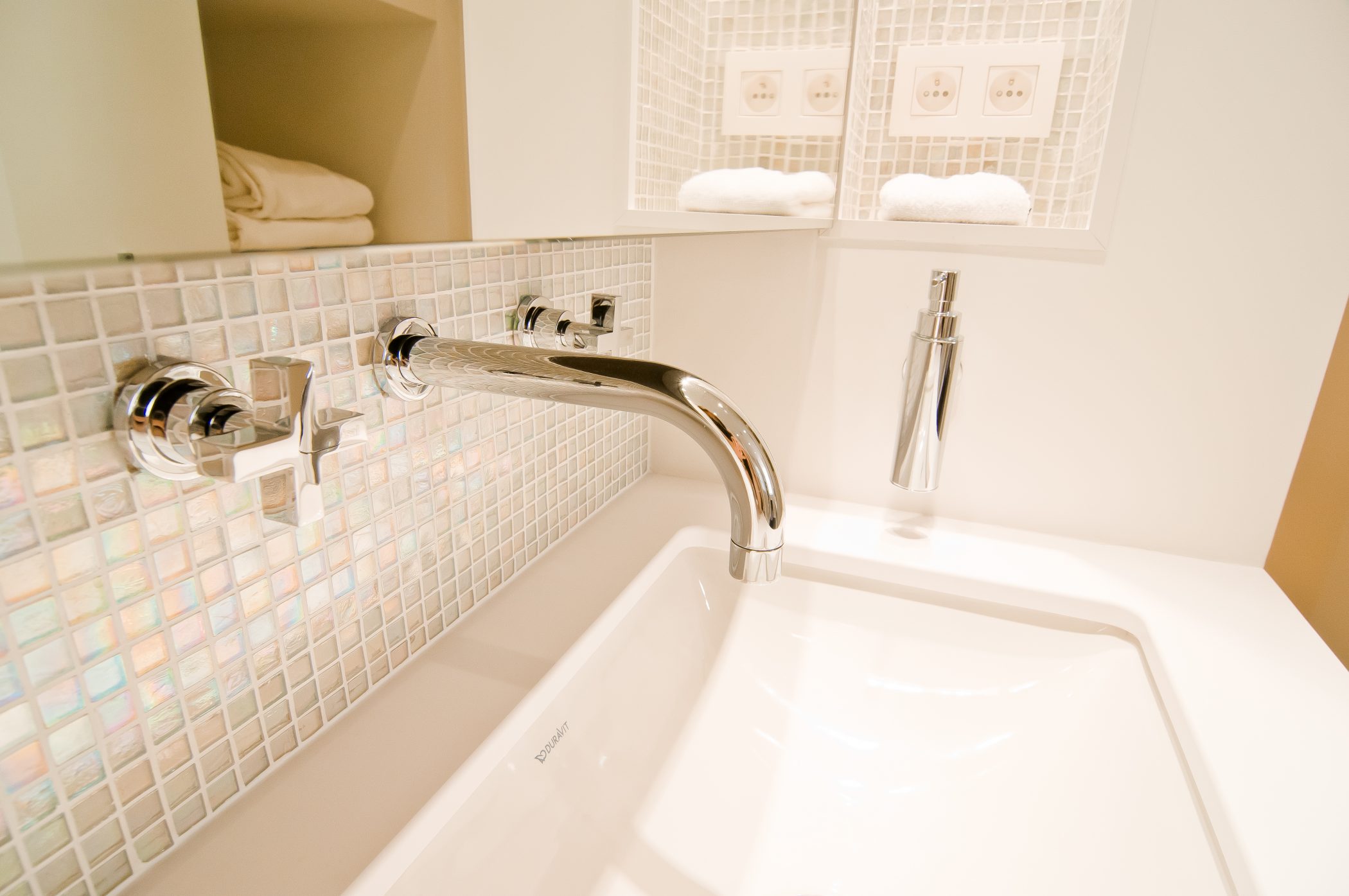
Upstairs, the original roof structure remains visible. The volumes have been redefined in order to create rooms. A glass floor offers a direct view of the pool below. The rooms feature custom furniture, including wall storage and a pull-out TV. A dressing room leads to the bathroom, where the central furniture is made of dark stained wood, in a continuity of materials and functions.
Conclusion
This transformation illustrates Home Design's ability to rethink an old building as a whole: structure, volumes and uses. By combining the conservation of existing elements and the integration of new spaces, the project gives new life to a castle farm steeped in history, adapted to contemporary lifestyles without denying its identity.