Clear expectations for modernization, rooted in what already exists
Customers have expressed a clear desire to modernize. The aim was not to radically transform the structure, but to work from what was the identity of the house. One element in particular has been preserved: the only existing fireplace, which was initially treated in a traditional way. This anchor point has become a common thread of the project, reinterpreted to dialogue with a more current style of writing.
The living room, between a revisited fireplace and integrated furniture
In the main living space, the old open fire has been replaced by a contemporary fireplace, clad in elongated black steel siding. This new design provides a more horizontal reading and structures the living room wall. Around this central element, a set of custom-made furniture was designed.
Where molded doors and classic furniture used to be, a stained oak veneer volume now accommodates built-in storage and two sliding doors. These allow access to the kitchen to be opened or closed, depending on the time of day and the desired uses.
A SieMatic PURE kitchen designed as a controlled space
Behind the sliding doors is a completely redesigned kitchen. The floor and false ceilings were redone, and a high-end German SieMatic kitchen was installed in a white composition, combined with a Silestone worktop.
The appliances are integrated seamlessly, including four built-in appliances and a large capacity refrigerator. Niches have been provided in the columns to accommodate small appliances and objects, while hiding the edges and technical sides of the wall units. Every detail is aimed at a continuous and careful reading of the volumes.
Circulations and custom elements
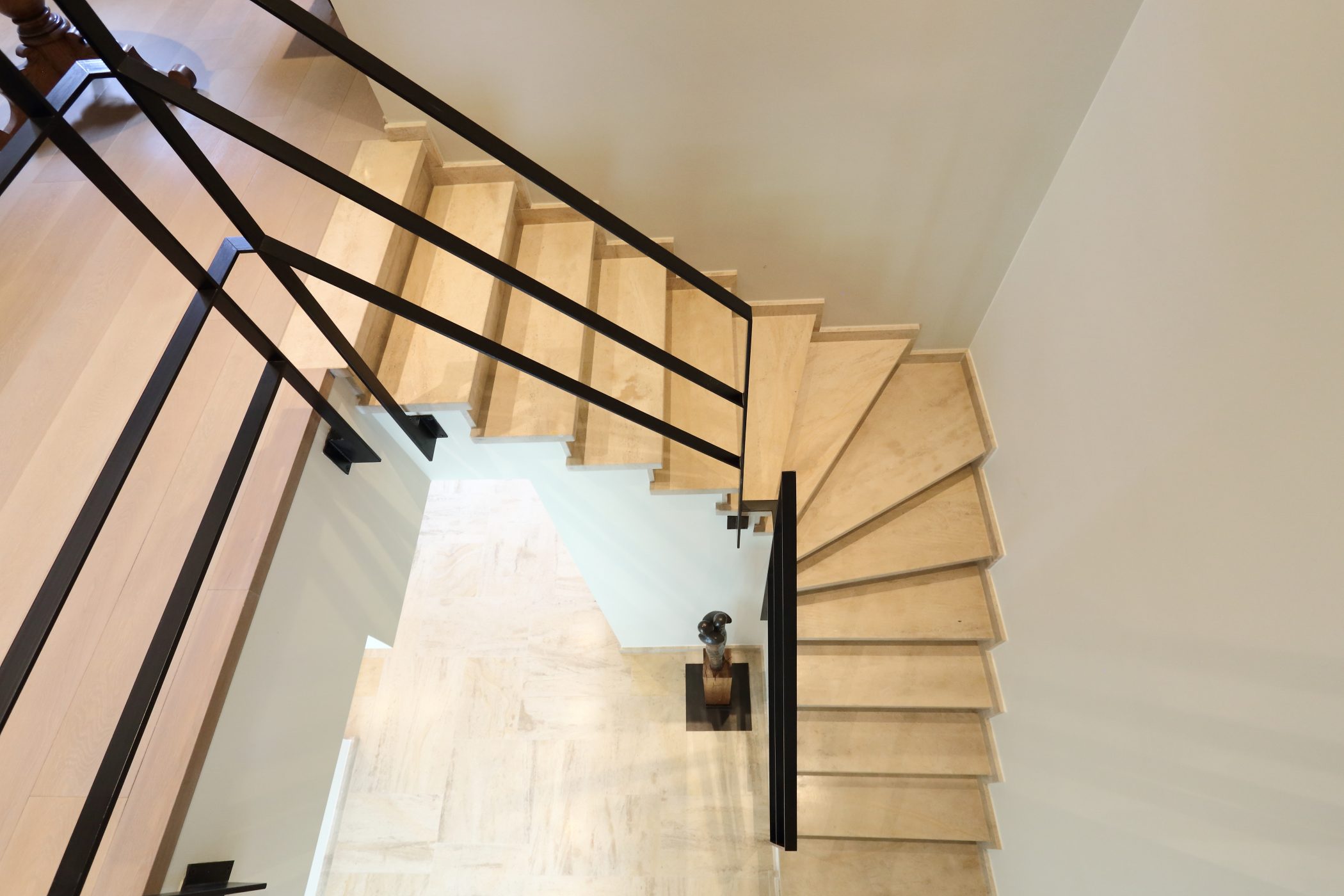
In the entrance and circulation area, the existing stair railing was replaced by a custom-made black steel structure. This simple gesture accompanies the rise and is part of the overall coherence of the project.
Upstairs, the bedrooms also benefit from custom furniture: built-in storage, dressing room and elements combining library and wardrobe functions.
Adjoining bathroom, in the continuity of the bedroom
The bathroom is located in the extension of the bedroom, separated by a partition. It is made of porcelain stoneware tiles and includes an Italian shower positioned near the window. The furniture, which is white in color, fits discreetly into the whole, without any visual break.
Conclusion
This transformation illustrates a measured approach to renovation: respect the existing, intervene with precision and integrate each layout into an overall logic. In Woluwe-Saint-Pierre, this villa thus finds a contemporary, coherent and sustainable reading, where each space has been redesigned to meet current uses without erasing the history of the place.